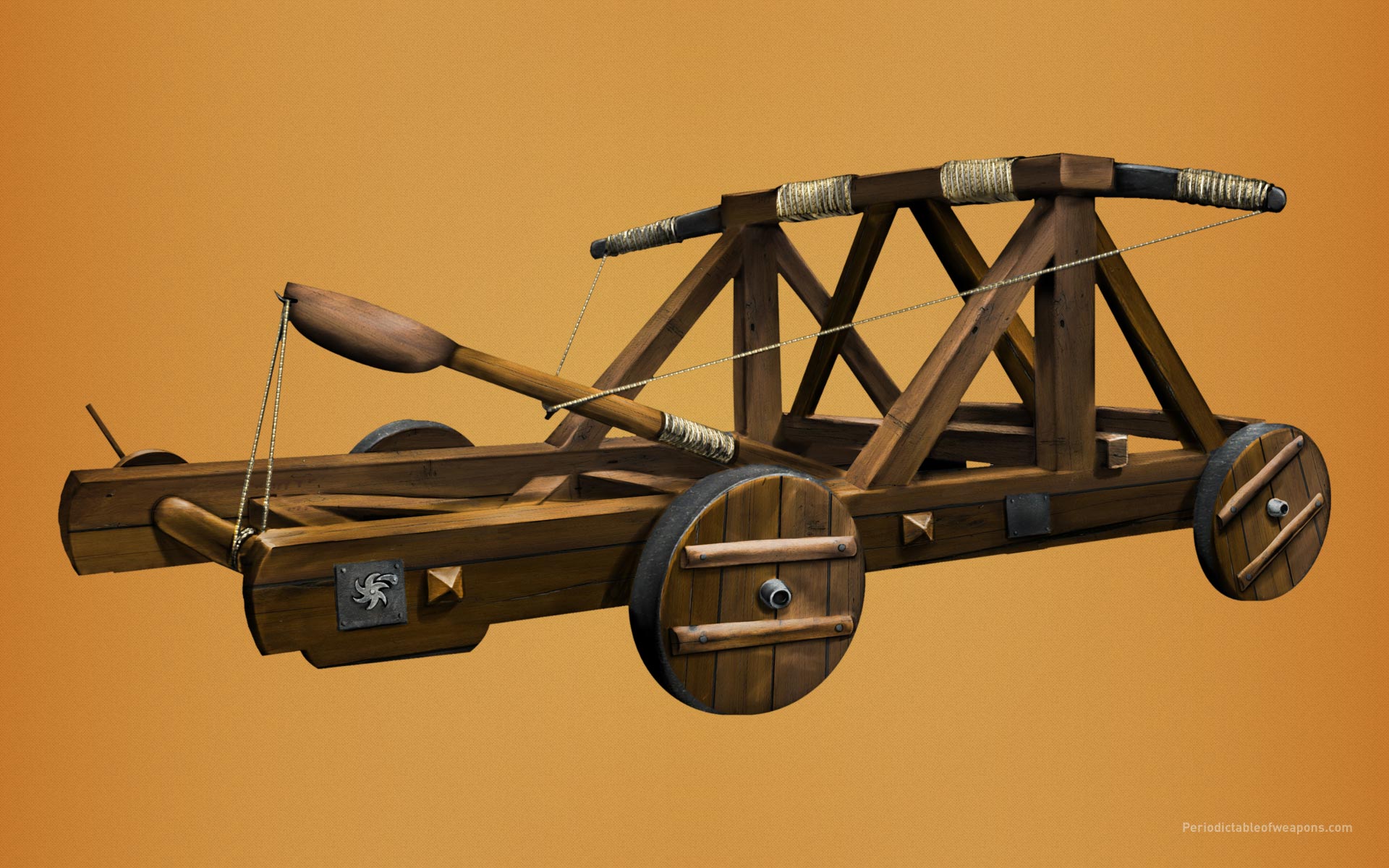
Catapult
Specifications
- Type
- Siege Engine
- Origin
- Greece / Mediterranean
- Era
- c. 400 BCE
- Notable Users
- Greek city-states, Roman legions, Hellenistic kingdoms
- Epoch
- Bronze and Iron Ages
History
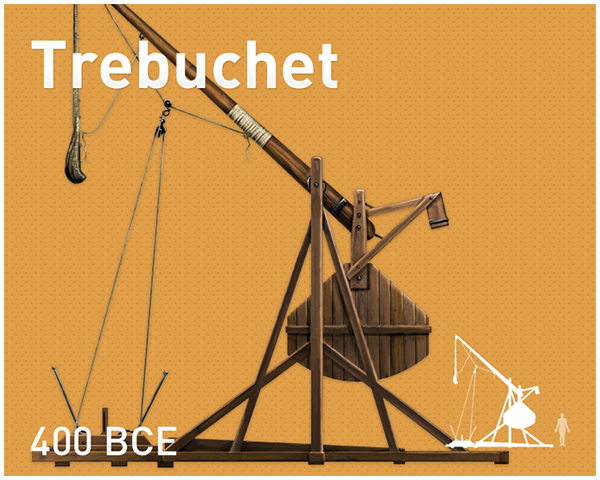
The catapult in its earliest form — the torsion-powered ballista and onager — was the artillery of the ancient world. Greek engineers in Syracuse developed the first catapults under Dionysius I around 399 BCE. Roman engineers refined the technology into standardized field pieces that accompanied every legion. The onager could hurl stone projectiles weighing up to 25 kg over distances of 300–400 meters, demolishing walls, towers, and formations of men with equal efficiency.
Significance
Before the catapult, destruction at range was limited to what one person could throw or shoot. After it, a machine could hurl 25 kilograms of stone 400 meters. That's a different kind of war. Every artillery piece since descends from this idea.
54 Weapons. Five Epochs. One Poster.
The Catapult is one of 8 weapons from the Bronze and Iron Ages featured on the poster.
Get the Poster