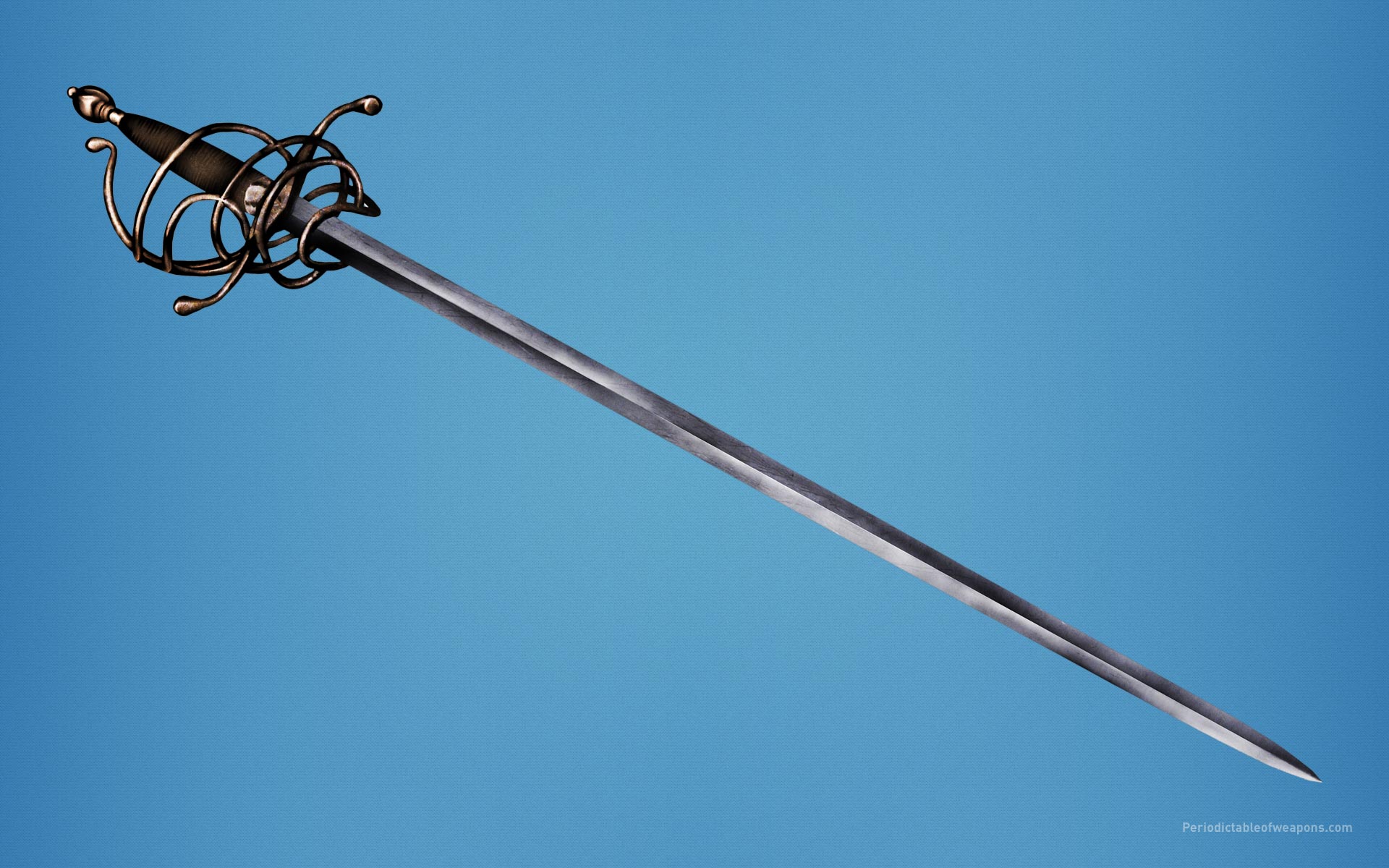
Rapier
Specifications
- Type
- Thrusting Sword
- Origin
- Spain / Italy
- Era
- 15th–17th century
- Notable Users
- Renaissance duelists, Spanish rodeleros, court gentlemen
- Epoch
- Early Modern Age
History
The rapier is a long, slender thrusting sword that emerged in the late 15th century as civilian self-defense replaced battlefield melee as the primary context for swordsmanship. With a blade of 100–130 cm optimized for the thrust, the rapier demanded a fundamentally different fighting style from the medieval longsword — linear, precise, and scientific. Italian and Spanish fencing masters developed elaborate theoretical systems: Salvator Fabris, Ridolfo Capoferro, and Jerónimo Sánchez de Carranza codified techniques that remain the foundation of modern fencing. The rapier’s complex hilts — rings, bars, and swept guards — were both functional hand protection and status displays.
Significance
The rapier marks the transition from martial weapon to martial art. It drove the development of fencing as a codified, scientific discipline and established the thrust as the dominant sword technique — a paradigm that persists in modern Olympic fencing.
More from the Early Modern Age
4 weapons
54 Weapons. Five Epochs. One Poster.
The Rapier is one of 5 weapons from the Early Modern Age featured on the poster.
Get the Poster